



To prevent the build-up of mucopolysaccharides from affecting his brain and causing cognitive and developmental delays, David received a bone marrow transplant when he was 18 months old. The transplant also allows the synthetic enzyme that he takes to cross the blood-brain barrier. But it also means that David’s immune system was weakened for many years.
“He basically had to repeat all of his vaccines over again, because he got a brand-new immune system,” Maggie Hotch explained. “That was very scary.”
Even though they live in a small village, visitors from cruise ships bring viruses to their community. COVID-19 cases reliably climb every spring and fall as tourist activity flourishes. The family often flies to Seattle so David can visit his specialists, which can be dangerous, because measles exposures frequently occur in airports.
“If you’ve put your kid through a bone marrow transplant, you’re not going to mess around with measles—or anything else,” Maggie Hotch said. “The high un-vaccination rate really does become scary. We’ve had mumps in Alaska for about a decade now; that goes around, and meningitis. There’s just so many preventable diseases that people are getting now, and it’s a huge concern.”
Worries over measles at school
The three families all participate in Little Lobbyists, a family-led organization that started in 2017 to lobby against the repeal of the Affordable Care Act. Since then, the group has met with members of Congress about a variety of issues, such as cuts to Medicaid.
“Our big issue… is home-based community services,” Maggie Gladson said. “It’s very frightening what the future might hold for Charlie and kids like him.”
Courtesy Maggie Gladson
Charlie is nonverbal and “semi-mobile.” When he’s not at school, he enjoys sitting beside the nearby creek, crunching leaves in his hands. “He loves being outside,” she said. “He likes any kind of transportation, really. He likes to drive. He likes to be on the tractor.”
The family decided to send Charlie to school even though they’re worried about measles. They want him to thrive, and that involves balancing fears about his physical health with what’s best for his mental wellbeing.
“We’ve had to seriously think about ‘how do we want Charlie to live?’” Maggie Gladson said. “We went him to be able to live his best life.”
She wishes other families would think of children like Charlie when they consider vaccination. “I don’t think people are educated about the broader concerns for herd immunity,” she said. “I hope that it’s just that they aren’t educated about it, because the other option would mean that they are educated about it and still choose not to vaccinate.”
Courtney Schadtle agrees. “When you look at Violette, you can’t tell she has disabilities or any of these medical issues,” she said. “They just don’t understand the complexity and how it’s not like a typical child, where they’re just down for a couple of days.”
Violette’s a “spunky, special little girl,” who loves music, Elmo, and the Cookie Monster and once took dance lessons. When it came time for the recital, she danced a few steps and then gave up on performing. Her mother wants to enroll Violette in other group classes but wonders if it will put her daughter at risk.
“I’m going to have to take it into consideration because of the increases of measles and other respiratory viruses. What is their vaccine status?” she said. “Are those kids going to come in sick and potentially pass it on to Violette?”
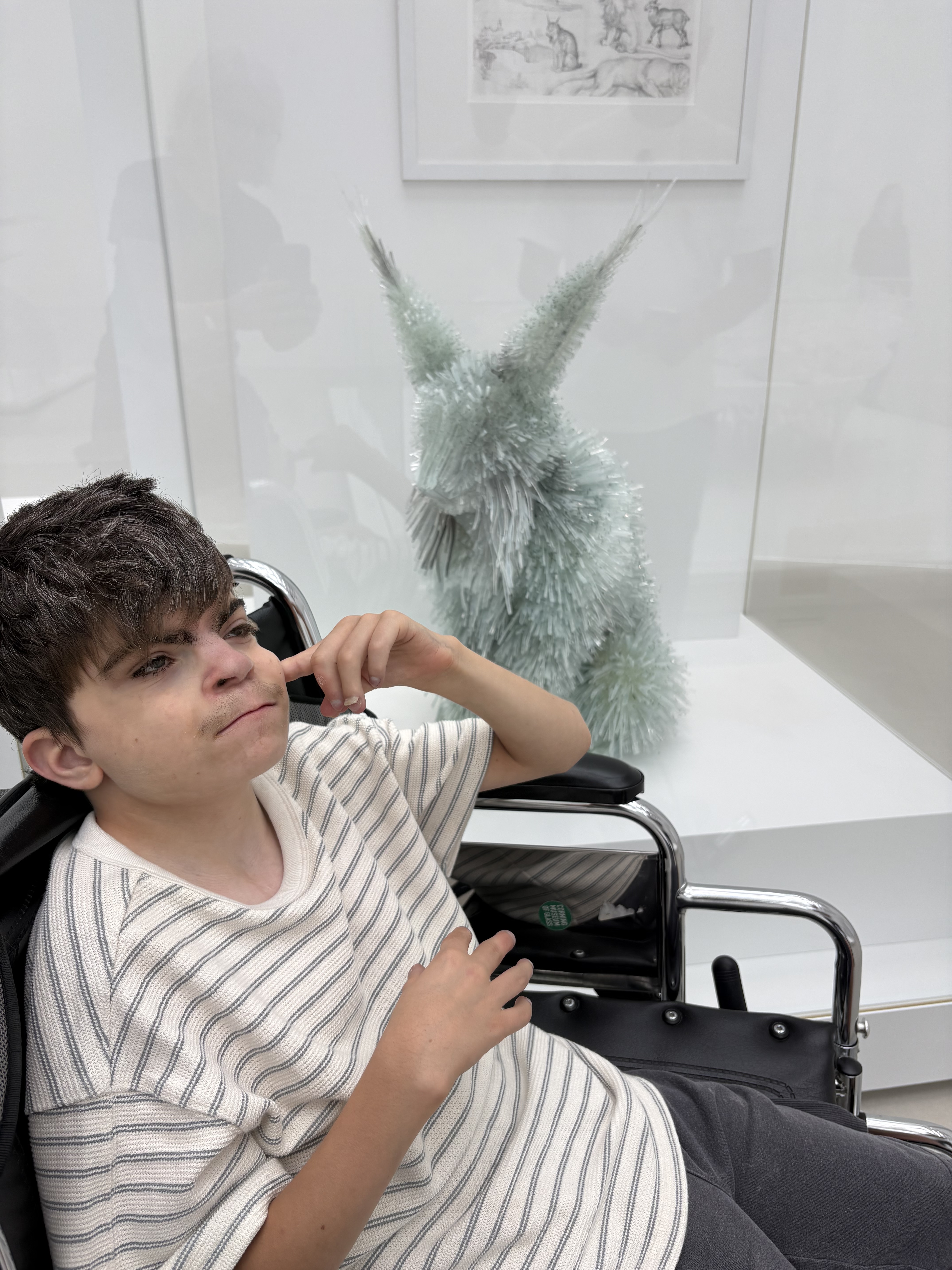
David uses Legos to create stop-motion animation and is a member of the Chilkat band of Tlingit Natives. In the summer, he works at the cultural center and is learning about storytelling. “He’s very proud of his heritage,” Maggie Hotch said.
When people die of illnesses such as measles or COVID-19, some people highlight that the person had an underlying condition, but she believes that rhetoric devalues people’s lives.
“[It’s] like, ‘Well, you were weaker to start with, so you didn’t matter in the first place,’” she said.
Maggie Gladson feels the same way. “It definitely feels like there is now a real concerted effort to care less about these kids,” she said.