



Disclaimer: Early release articles are not considered as final versions. Any changes will be reflected in the online version in the month the article is officially released.
Recurrent Facial Folliculitis Caused by Klebsiella aerogenes Sequence Type 117 in Men who Have Sex with Men

Author affiliation: Pitié Salpêtrière Hospital, APHP, Paris, France (G. Monsel, A. Bleibtreu, B. Rached, E. Turquier, V. Pourcher, V. Bérot); Dermatologic Infectiology and Sexually Transmitted Infections Working Group of the French Society of Dermatology, Paris (G. Monsel, F. Durupt, J. Krygier, O. Chosidow, J.-N. Dauendorffer, M. Jachiet, V. Bérot, R. Salle, S. Fouéré, C. Brin);, Croix Rousse Hospital, Hospices Civils de Lyon, Lyon, France (F. Durupt, M. Godinot, M. Bonjour, O. Dauwalder); Laboratoire Hospitalier Universitaire de Bruxelles–Universitair Laboratorium Brussel, Université Libre de Bruxelles, Brussels, Belgium (N. Yin, D. Martiny); University of Mons, Mons, Belgium (D. Martiny); St. Pierre University Hospital, Université Libre de Bruxelles, Brussels (J. Krygier); Ambroise Paré-UVSQ and Bicêtre-Paris Saclay Hospitals, APHP, Paris (O. Chosidow); University of Texas at Austin, Austin, Texas, USA (L. Porter); Edouard Herriot Hospital, Hospices Civils de Lyon, Lyon (M. Godinot); Saint Louis Hospital, Paris Cité University, APHP, Paris (E. Hau, J.-N. Dauendorffer, M. Jachiet, M. Liberge, B. Berçot, S. Fouéré); Sorbonne University, INSERM UMR S 1136, Pierre Louis Epidemiology and Public Health Institute, Paris (V. Pourcher); Savoie Metropole Hospital, Chambéry, France (M. Levast, C. Brin); Centre National de Référence des Staphylocoques, Lyon (O. Dauwalder); Centre for Genital and Sexually Transmitted Diseases, Hôtel-Dieu Hospital, APHP, Paris (R. Salle); Kremlin Bicêtre Hospital, APHP, Le Kremlin Bicêtre, France (L. Dortet, C. Emeraud); Associated French National Reference Center for Antibiotic Resistance: Carbapenemase-Producing Enterobacteriaceae, Le Kremlin-Bicêtre (L. Dortet, C. Emeraud); IHU SEPSIS Comprehensive Sepsis Center, Université Paris-Saclay, Le Kremlin Bicêtre (L. Dortet, C. Emeraud)
Suggested citation for this article
Abstract
We describe 17 cases of recurrent facial folliculitis caused by Klebsiella aerogenes bacteria in men who have sex with men in France, Belgium, and the United States. Whole-genome sequencing showed all isolates belonged to sequence type 117 or related lineages. Our findings suggest sexual transmission and highlight emerging clinical and public health concerns.
Klebsiella aerogenes (formerly Enterobacter aerogenes) is a gram-negative bacillus present in the environment and human gut microbiota and is an uncommon cause of community-acquired skin and soft tissue infections. Since 2025, a pattern of relapsing facial folliculitis caused by K. aerogenes has been reported in France, Belgium, and Spain (1–3). Those cases occurred exclusively among men who have sex with men (MSM), which strongly suggests that K. aerogenes could be an emerging sexually transmissible pathogen within that population (1–3). Whole-genome sequencing (WGS) of 4 isolates from Belgium revealed they all belonged to sequence type (ST) 117 (2), suggesting the emergence of a particular clone. Unfortunately, isolates reported in France and Spain were not sequenced, precluding confirmation of that hypothesis (1,3). We describe a multinational case series of 17 MSM with recurrent K. aerogenes facial folliculitis (KAFF) and analyze their epidemiologic, clinical, microbiologic, and genomic characteristics to assess the emergence of a specific lineage.
We retrospectively identified cases through clinician notification within the Dermatologic Infectiology and Sexually Transmitted Infections Working Group in Paris, Lyon, and Chambéry, France; Brussels, Belgium; and Austin, Texas, USA. We extracted clinical data from medical records. We defined disease duration as the time from symptom onset to healing or last follow-up. We recovered 24 K. aerogenes isolates from 17 patients, with multiple isolates in cases of recurrence or longitudinal sampling.
Figure 1
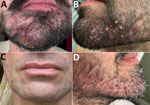
Figure 1. Clinical appearance of patients in study of Klebsiella aerogenessequence type 117 facial folliculitis in men who have sex with men in France, Belgium, and the United States. A)…
All 17 patients were MSM; median age was 35 years (interquartile range [IQR] 31.5–45.5 years) (Appendix 1 Table). None of the patients were HIV-positive or immunocompromised; 9 were receiving HIV preexposure prophylaxis (PrEP). Ten patients reported history of sexually transmitted infections (STIs); 11 had a remote history (>10 years earlier) of acne treated with isotretinoin, doxycycline, or both, followed by a prolonged symptom-free interval before the folliculitis. Eight patients reported regular attendance at communal facilities (hot tubs, saunas, swimming pools, or gyms). We classified lesions as superficial for follicular pustules or inflammatory papules, deep for painful purulent nodules indicating deeper follicular involvement, or mixed. Lesions were exclusively facial, predominantly in the beard and moustache areas (Figure 1).
The median time from lesion onset to diagnosis was 7 (IQR 1.5–16) months. Before K. aerogenes identification, patients received antimicrobial drugs targeting gram-positive cocci without improvement. In recurrent or persistent cases, repeated cultures consistently yielded K. aerogenes. Nasal swab cultures were positive in 8 (73%) of 11 tested patients. Mycologic samples remained negative, thereby excluding tinea barbae. Median disease duration was 23 (IQR 9–54) months. Thirteen patients initially responded to targeted antimicrobial therapy but relapsed within 1–3 weeks after discontinuation. Overall, 12 patients did not achieve cure, 2 achieved sustained remission, 2 were still under treatment, and 1 did not complete follow-up care.
We performed WGS on all 24 isolates using short-read technology (Hiseq; Illumina, https://www.illumina.com). We conducted multilocus sequence typing (MLST) and resistome analysis using PubMLST (https://pubmlst.org) and ResFinder (https://genepi.food.dtu.dk/resfinder) databases. All folliculitis isolates belonged to ST117, except 1 ST117-like isolate (1FOLC4) with 1 nucleotide variation in rplB. One isolate (1FOLB1) acquired the sul2 gene, conferring sulfamethoxazole resistance, which was absent in earlier isolates from the same patient; no other acquired resistance genes were detected.
Figure 2
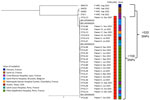
Figure 2. SNP-based phylogeny of Klebsiella aerogenessequence type (ST) 117 and related isolates from study of facial folliculitis in men who have sex with men in France, Belgium, and the…
We assessed genetic diversity and relatedness phylogenetic analysis using SNIppy version 4.6.0 (https://github.com/tseemann/snippy); reference genome was strain 1FOLA5. Analysis included 4 additional K. aerogenes ST117 isolates from the French National Reference Center for carbapenem resistance, which were unrelated to folliculitis cases and genomes from a previous study (2). Folliculitis-associated isolates were highly divergent from unrelated ST117 isolates (>520 single-nucleotide polymorphisms [SNPs]) but clustered together regardless of geographic origin (Figure 2; Appendix 2 Figure). Within that cluster, pairwise distances were 1–159 SNPs; for most isolates they were 60−80 SNPs (Figure 2; Appendix 2 Figure). Given an estimated evolutionary rate of 7–10 SNPs per year in Enterobacterales (4), those observed distances suggest a recent common ancestor and support the recent emergence and international dissemination of this lineage within interconnected MSM sexual networks.
Although K. aerogenes is not considered a sexually transmitted pathogen, our findings support transmission through intimate contact: all cases occurred in MSM, many patients had previous STIs or were receiving PrEP, and the distribution of lesions is compatible with exposure during oro-anal contact. However, direct evidence of sexual transmission is lacking, no contact tracing was conducted, no documented transmission events were identified, and alternative routes including shared environmental exposures cannot be excluded. The emergence and intercontinental dissemination of enteric pathogens in MSM, such as Shigella spp., Campylobacter jejuni, and extended-spectrum β-lactamase–producing Enterobacterales, have been well documented (5–7). Rectal swab speciemens were collected from some patients to assess potential enteric carriage, but K. aerogenes was not identified within the fecal Enterobacterales flora. Similarly, sexually transmissible dermatophytes, such as Trichophyton mentagrophytes internal transcribed spacer genotype VII, as well as monkeypox virus, illustrate the expanding spectrum of pathogens transmitted through intimate contact (8,9). Because half of the patients in this investigation reported exposure to communal water facilities, nonsexual transmission may also occur. The condition might be better classified as sexually transmissible, rather than strictly sexually transmitted (10).
KAFF appears to be an uncommon and likely underrecognized condition, consistent with previous reports of gram-negative folliculitis in patients who had acne after prolonged antibiotic exposure (11,12). Because K. aerogenes is not a recognized skin pathogen, it may be overlooked in cutaneous samples, which contributes to underdiagnosis. The broad clinical spectrum, from superficial to disfiguring folliculitis, suggests a major role for host factors (11). Its strict facial localization points to regional determinants such as sebum composition and the follicular microenvironment (13). Previous use of systemic antimicrobial drugs can disrupt the cutaneous and nasal microbiome, reducing colonization resistance and promoting the emergence of gram-negative organisms such as K. aerogenes (2,11–13).
We observed nasal colonization consistent with previous descriptions of gram-negative folliculitis (11,12), supporting the hypothesis that the nasal cavity is a reservoir for K. aerogenes (2,3,12). However, its clinical significance and role in recurrence remain unclear. A study in Guangzhou, China, reported nasal carriage rates of ≈30% among MSM; that study identified 2 ST117 strains, supporting international dissemination of that lineage (14). In several patients, relapses occurred despite elimination of predisposing factors, suggesting persistence in a difficult-to-eradicate reservoir (1). Dysbiosis of skin microbiota and bacterial factors such as virulence traits or biofilm formation might also contribute to persistence and treatment failure (13,14,15).
Therapeutic management of KAFF remains challenging (1–3). Although trimethoprim/sulfamethoxazole or fluoroquinolones often lead to apparent clinical cure, relapses commonly occur soon after treatment discontinuation (1–3). Those recurrences have prompted consideration of nonantimicrobial approaches such as oral isotretinoin (1,3), which might act by reducing sebum production and follicular reservoirs rather than through direct antibacterial activity (12). By limiting repeated antimicrobial exposure and associated cutaneous dysbiosis, isotretinoin could help restore microbial balance (13), although its mechanisms and clinical effectiveness in KAFF remain uncertain. The emergence of the recurrent treatment-refractory ST117 clone in MSM is particularly concerning in the context of increasing antimicrobial pressure from routine STI management and implementation of doxycycline postexposure prophylaxis.
Our observations highlight the need for further research into the virulence determinants of K. aerogenes ST117, its reservoirs, and its modes of transmission. Studies integrating clinical data, microbiology, and microbiome analyses will be crucial to clarify the role of host factors, antimicrobial exposure, and skin ecosystem disruption in the pathogenesis and persistence of that pathogen and determine the optimal therapeutic strategy. Surveillance in sexual health clinics and dermatology care will better define the burden of KAFF and guide prevention strategies.
Dr. Monsel is an infectious diseases specialist and dermatologist at Pitié-Salpêtrière Hospital, Paris, France. Her clinical and research interests include infectious dermatology and sexually transmitted infections.
Acknowledgments
We thank Célestin Mairesse for technical assistance with the sequencing of the Belgian strains.
All patients gave signed informed consent for publication of their case details and clinical photographs. Given the noninterventional nature of the study, approval from a patient protection committee was not required. This study was conducted in compliance with the reference methodology 004 in accordance with French law (no. 78-17, Computers, files and liberties, 6 January 1978).
Sequence data from this study were deposited in the National Center for Biotechnology Information Sequence Read Archive (BioProject no. PRJNA1427417). Sequence data from the previously published Belgium study (25) were deposited under BioProject no. PRJNA1250536.
The SEPSIS Comprehensive Center–IHU SEPSIS was supported by the French National Research Agency–France 2030 programme (grant no. ANR-23-IAHU-0004)
Author contributions: conceptualization: G.M., C.E., and A.B.; data collection: G.M., A.B., O.C., L.P., B.L., N.Y., J.K., D.M., O.D., F.D., M.G., J.N.D., M.B., V.B., E.H., M.J., E.T., B.R., Ma Li, Ma Le, C.B., R.S., S.F.; data analysis and interpretation: G.M. and C.E.; literature search: G.M. and C.E.; phylogenetic analysis: C.E.; writing original draft: G.M. and C.E.; figures and table: G.M. and C.E.; funding acquisition: L.D.; manuscript revision: all authors.
References
-
Bérot V, Monsel G, Dauendorffer J-N, Aubry A, Nebbad B, Schneider P, et al.; Groupe Infectiologie Dermatologique et Infections Sexuellement Transmissibles. (GrIDIST) de la Société Française de Dermatologie. Klebsiella aerogenes-related facial folliculitis in men having sex with men: a hypothetical new STI? J Eur Acad Dermatol Venereol. 2025;39:e10–2. DOIPubMedGoogle Scholar
-
Yin N, Krygier J, Mairesse C, Libois A, Quoilin S, Martiny D. Klebsiella aerogenes ST117 causing folliculitis in men having sex with men, Belgium, February 2025. Euro Surveill. 2025;30:
2500304 . DOIPubMedGoogle Scholar -
García Muñoz N, Sáez Vicente A, Feito Sancho L, Santa Cruz Martín A, Folcrá González M, Tarín Vicente EJ, et al. Beard folliculitis by Klebsiella aerogenes in a young man: an emergent sexually transmitted infection? Int J STD AIDS. 2026;37:76–8. DOIPubMedGoogle Scholar
-
Emeraud C, Mahamat A, Jousset AB, Bernabeu S, Goncalves T, Pommier C, et al. Emergence and rapid dissemination of highly resistant NDM-14–producing Klebsiella pneumoniae ST147, France, 2022. Euro Surveill. 2023;28:
2300095 . DOIPubMedGoogle Scholar -
Mason LCE, Greig DR, Cowley LA, Partridge SR, Martinez E, Blackwell GA, et al. The evolution and international spread of extensively drug resistant Shigella sonnei. Nat Commun. 2023;14:1983. DOIPubMedGoogle Scholar
-
Surgers L, Chiarabini T, Royer G, Rougier H, Mercier-Darty M, Decré D, et al. Evidence of sexual transmission of extended-spectrum β-lactamase–producing Enterobacterales: a cross-sectional and prospective study. Clin Infect Dis. 2022;75:1556–64. DOIPubMedGoogle Scholar
-
Gaudreau C, Rodrigues-Coutlée S, Pilon PA, Coutlée F, Bekal S. Long-lasting outbreak of erythromycin- and ciprofloxacin-resistant Campylobacter jejuni subspecies jejuni from 2003 to 2013 in men who have sex with men, Quebec, Canada. Clin Infect Dis. 2015;61:1549–52. DOIPubMedGoogle Scholar
-
Jabet A, Dellière S, Seang S, Chermak A, Schneider L, Chiarabini T, et al. Sexually transmitted Trichophyton mentagrophytes genotype VII infection among men who have sex with men. Emerg Infect Dis. 2023;29:1411–4. DOIPubMedGoogle Scholar
-
Allan-Blitz LT, Gandhi M, Adamson P, Park I, Bolan G, Klausner JD. A position statement on mpox as a sexually transmitted disease. Clin Infect Dis. 2023;76:1508–12. DOIPubMedGoogle Scholar
-
Raccagni AR, Castagna A, Nozza S. When is it a sexually transmitted infection? Intimate contact transmission of pathogens not traditionally defined as STIs. Curr Opin Infect Dis. 2025;38:65–70. DOIPubMedGoogle Scholar
-
Neubert U, Jansen T, Plewig G. Bacteriologic and immunologic aspects of gram-negative folliculitis: a study of 46 patients. Int J Dermatol. 1999;38:270–4. DOIPubMedGoogle Scholar
-
James WD, Leyden JJ. Treatment of gram-negative folliculitis with isotretinoin: positive clinical and microbiologic response. J Am Acad Dermatol. 1985;12:319–24. DOIPubMedGoogle Scholar
-
Dreno B, Dekio I, Baldwin H, Demessant AL, Dagnelie MA, Khammari A, et al. Acne microbiome: from phyla to phylotypes. J Eur Acad Dermatol Venereol. 2024;38:657–64. DOIPubMedGoogle Scholar
-
Cheng Q, Ma Z, Gong Z, Liang Y, Guo J, Ye X, et al. Whole-genome sequencing analysis of Klebsiella aerogenes among men who have sex with men in Guangzhou, China. Front Microbiol. 2023;14:
1102907 . DOIPubMedGoogle Scholar -
Feng Y, Yang Y, Hu Y, Xiao Y, Xie Y, Wei L, et al. Population genomics uncovers global distribution, antimicrobial resistance, and virulence genes of the opportunistic pathogen Klebsiella aerogenes. Cell Rep. 2024;43:
114602 . DOIPubMedGoogle Scholar
Figures
Suggested citation for this article: Monsel G, Bleibtreu A, Durupt F, Rached B, Yin N, Martiny D, et al. Recurrent facial folliculitis caused by Klebsiella aerogenes sequence type 117 in men who have sex with men. Emerg Infect Dis. 2026 Jul [date cited]. https://doi.org/10.3201/eid3207.260572
Original Publication Date: June 17, 2026
Table of Contents – Volume 32, Number 7—July 2026