



Andes hantavirus (ANDV, species name Orthohantavirus andesense) belongs to the genus Orthohantavirus in the family of Hantaviridae, order Bunyavirales. ANDV is an enveloped virus with a negative-sense, single-stranded and triple-segmented RNA genome, assigned as large (L), medium (M), and small (S) segments1 (Fig. 1). The three segments encode for an RNA-dependent RNA polymerase (RdRp, L segment), the nucleocapsid protein (N, S segment), a non-structural protein (NSs, S segment), and a glycoprotein precursor (M segment), which subsequently undergoes cleavage at the endoplasmic reticulum (ER) into two mature glycoprotein subunits named Gn and Gc1. These glycoprotein subunits form heterodimeric tetramers that directly interact with their host cell receptor, for ANDV protocadherin-1 (PCDH1), for subsequent cellular entry and infection2. Just recently, cryo-electron microscopy (cryo-EM) of these GnGc tetramer structures revealed a prefusion conformation that allows pH-dependent activation for subsequent fusion3. ANDV circulates mainly in the long-tailed pygmy rice rat (Oligoryzomys longicaudatus), which is endemic in areas along the Andes mountains of Chilean and Argentinian Patagonia4. Spillover infections to humans from rodent hosts often occur after inhalation of dust aerosols containing elements of rodent feces, urine, saliva, or similar material1. Direct interaction with rodents (e.g., scratches, bites) can also lead to human infections. Thus, risk factors for exposure to hantaviruses include activities in rodent habitat, for example, forestry or agriculture, as well as cleaning activities and direct contact with rodent excreta, especially without appropriate personal protective equipment (e.g. gloves, face masks) (Fig. 1)5. ANDV infections are often symptomatic with a case-fatality ratio estimated at 21%–36%, depending on the geographic region, with the highest incidences in Patagonia6. However, the rate of asymptomatic infections is not completely clear and asymptomatic infections are likely also common. Symptom onset happens between week one and week six post infection; however, incubation periods of up to eight weeks have been reported in isolated cases. Infected individuals can experience fever, headache, body aches, respiratory symptoms, and general malaise. The disease can then progress to the severe hantavirus (cardio)pulmonary syndrome (HPS or HCPS) that can result in hospitalization, the necessity of mechanical ventilation, and death, especially (but certainly not only) in immunocompromised individuals7,8,9.
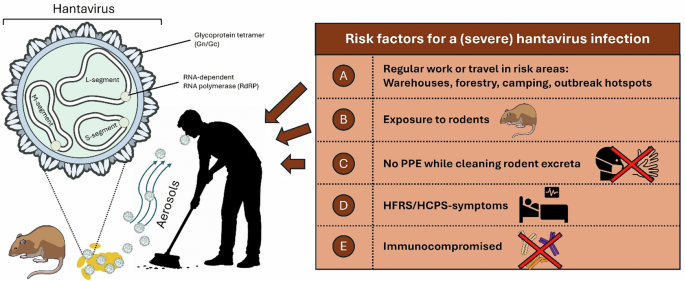
Hantaviruses are negative-sense, single-stranded RNA viruses that have three genomic segments. They cause persistent infections in rodent reservoirs. Hantavirus spillover infections occur most commonly via inhalation of aerosols containing rodent excreta. The probability of acquiring a hantavirus infection can increase based on multiple factors, such as working or traveling in risk areas and exposure to rodents or their excreta without personal protective equipment (PPE). Depending on the specific hantavirus, these infections can lead to hantavirus (cardio)pulmonary syndrome (HPS or HCPS, New World hantaviruses) or hemorrhagic fever with renal syndrome (HFRS, Old World hantaviruses). (Illustration: NIAID Visual & Medical Arts. (10/7/2024). Bunyavirus. NIAID NIH BIOART Source. bioart.niaid.nih.gov/bioart/64 and bioart.niaid.nih.gov/bioart/63).