


Share this article
In a recent episode of Transmission Interrupted, host Jill Morgan, RN, Site Manager at the Emory Serious Communicable Diseases Unit, talks with Katie Willet, MD, FACEP, Associate Professor, UNMC Department of Emergency Medicine, Director of the Health Security Fellowship Program, and Associate Medical Director of the National Quarantine Unit; Morgan Shradar, MPH, BSN, RN, Nurse Manager of the Nebraska Biocontainment Unit and National Quarantine Unit; and Angie Vasa, MSN, RN, Director of Emergency Preparedness and Special Pathogens Programs at Nebraska Medicine.
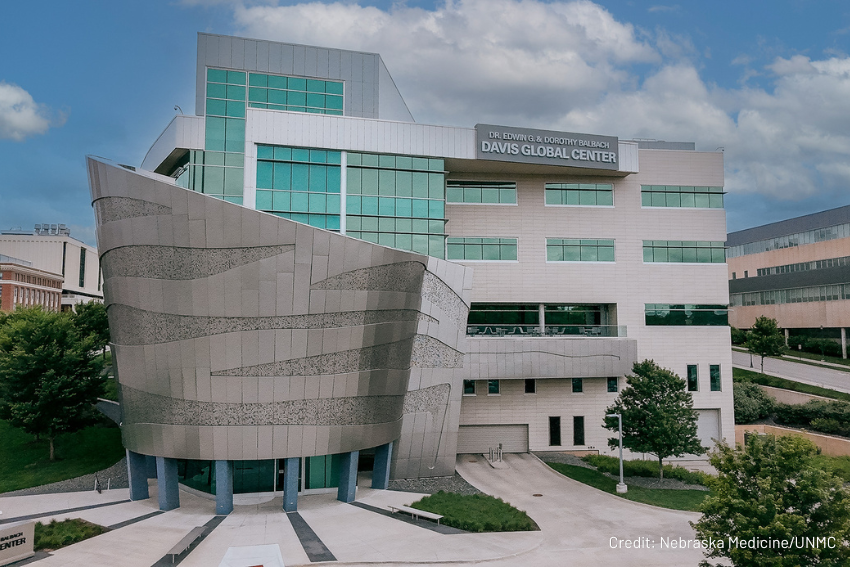
Their conversation focuses on the National Quarantine Unit (NQU), the nation’s only federally funded quarantine facility, which recently cared for 18 guests from the MV Hondius cruise ship following a hantavirus exposure event.
Jill and her guests discuss how the NQU was created following lessons learned during the 2014-2015 West Africa Ebola outbreak, when exposed individuals often had to quarantine in homes, hotels, or hospital rooms not designed for long-term monitoring. They explain the differences between quarantine, isolation, and biocontainment care, and explore how the NQU provides comprehensive medical, behavioral health, and logistical support while preserving dignity, autonomy, and quality of life for individuals exposed to high-consequence infectious diseases.
The discussion also highlights the unit’s recent activation during a prolonged Andes hantavirus response, demonstrating the NQU’s ability to coordinate complex care and collaborate with local, state, federal, and international partners. Designed to monitor individuals exposed to high-consequence infectious diseases and rapidly move them into a biocontainment unit for clinical care if they develop symptoms. The NQU is designed to provides far more than medical observation, the staff aim to preserve quality of life and holistic support throughout the monitoring period. During the six-week activation, a multidisciplinary team coordinated daily symptom monitoring alongside comprehensive support services, including prescription management, routine healthcare needs, meals, laundry, behavioral health resources, and recreational activities, ensuring guests remained safe, comfortable, and connected throughout their stay.
Listeners will gain insight into the critical role of preparedness, multidisciplinary teamwork, community support, and innovation in maintaining this unique national public health resource.
Key Takeaways
- The National Quarantine Unit fills a unique national preparedness gap by safely monitoring exposed individuals before illness develops.
- Quarantine is a public health tool, not hospital care. Most individuals housed in the NQU are healthy and under observation.
- Preparedness depends on constant training and innovation. The NQU team has been refining plans, exercises, and capabilities since before the unit opened.
- Responses require collaboration across local, state, federal, and international partners.
- People-centered care is a priority. The NQU focuses on supporting physical, emotional, and social well-being during quarantine.
- Flexibility is essential. Every pathogen, exposure event, and patient population presents new challenges.
- Community support matters. Omaha’s “Nebraska Nice” culture played a meaningful role in helping quarantined individuals feel welcomed and supported.