



Mayaro virus (MAYV) is an endemic, neglected, zoonotic alphavirus (Togaviridae family) in Latin America and the Caribbean for which surveillance, diagnostic testing, and genomic data are limited. MAYV infections often are confused with other arboviral illnesses, and no licensed vaccine or specific antiviral treatment is available (1). MAYV causes acute and chronic arthritogenic disease (2) with fever, rash, and potentially year-long arthralgia (3). Typically maintained in the sylvatic cycle by the Haemagogus janthinomys mosquito and nonhuman primates (4), MAYV frequently spills over to humans (5). Experimental evidence suggests urban transmission is possible with Aedes aegypti and A. albopictus mosquitos (6). Increased reports of MAYV infection (7,8) led us to study the emergence and spread of new Mayaro strains in Peru.
Figure 1
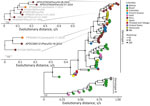
Figure 1. Maximum-likelihood phylogenetic tree of Mayaro virus sequences from Peru compared with global Mayaro virus sequences. All sequences were mapped onto the phylogeny by sampling country and genotype using the ggtreeExtra…
We collected 1,000 whole blood specimens from patients encountered at 6 health facilities who had acute febrile illness (AFI) during September 2023–October 2024 (Appendix). We sequenced samples by using unbiased, metagenomic next-generation sequencing (NGS) and target-enriched NGS methods (9) (Appendix). We initially detected MAYV in 5 persons (5/1,000 [0.5%]) by using teamNGS, yielding 1 complete and 4 partial genome sequences with 13%–78% coverage (Table). BLAST analysis (https://blast.ncbi.nlm.nih.gov) indicated the sequences bore 99% nucleotide identity to a strain isolated from Peru in 2018 (GenBank accession no. KY026196). We inferred a maximum-likelihood phylogeny by using IQ-TREE2 (10) (Figure 1), placing all sequences from this study (GenBank accession nos. PZ530724–6) within MAYV genotype D, which splits into 2 monophyletic subclades. One subclade consists mostly of sequences from Peru, including those from patient samples APDC070024 and APDC070034, with a sequence from Colombia at its root. The other subclade shows a similar pattern for patient sample APDC060121. Those results suggest that MAYV diversification in Peru is driven by endemic evolution or repeated introductions, probably from Colombia.
Figure 2
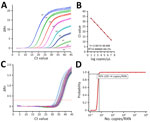
Figure 2. Development and performance evaluation of a novel, dual-target quantitative reverse transcription PCR for Mayaro virus detection. A) Amplification curves from 10-fold serial dilutions of in vitro transcripts from all lineages….
Considering NGS sensitivity limitations and brief viremia periods, we developed a quantitative reverse transcription PCR to detect additional cases of MAYV infection and assess the role of MAYV in AFI in Peru. Our novel, dual-target molecular assay, guided by phylogenetic analysis (Figure 1), targets 2 conserved regions within the nonstructural protein 1 gene, both labeled in the Cy5 channel (Figure 2, panel A; Appendix Figure 1). The assay demonstrated linearity of 107–101 copies/reaction (R2 0.99; efficiency 90%) (Figure 2, panel B) and included an internal control for extraction and amplification validation (Figure 2, panel C). Analytical sensitivity (95% CI and probit analysis) indicated a limit of detection of ≈4 copies/reaction (Figure 2, panel D). We re-screened 1,000 samples from AFI patients on the Abbott m2000 platform (Abbott Molecular, https://www.molecular.abbott), confirming 5 previously identified positives and detecting 1 additional PCR-positive case missed by NGS (cycle threshold >28), consistent with the detection limits of target-enrichment NGS of log ≈3.0 copies/mL (Table).
Figure 3
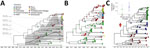
Figure 3. Phylodynamic analysis of emergence, lineage fitness, and explicit landscape dynamics of Mayaro virus lineages. A) Time-scaled maximum clade credibility tree displaying temporal emergence of Mayaro virus strains with tMRCA and…
By using phylodynamic and phylogeographic approaches (11), we next sought to understand which MAYV lineages are emergent, where they are originating from, and what is driving their expansion. In our temporal analysis using a Gaussian Markov random field prior (12), we traced the emergence of MAYV back to 1886, with an initial split of the 2 main genotypes occurring in 1897 (genotype L) and 1912 (genotype D) (Figure 3, panel A; Appendix Figure 2). The estimated evolutionary rate was 2.6 × 10⁻⁴ substitutions/site/year. The analysis also revealed that the cluster containing sequences from Trinidad and Tobago emerged around 1954, coinciding with the first reported case of MAYV infection (13), indicating accurate clock calibration in our dataset (Figure 3, panel A). Regarding Peru, we identified multiple clusters emerging at different timepoints, primarily 40–49 years ago. The cluster containing the APDC070034/Peru/02-08-2024 and APDC070024/Peru/02-01-2024 strains, which grouped with a strain from Columbia (GenBank accession no. PP505832), emerged approximately in 2010, and the ancestor for the APDC060121/Peru/03-18-2024 was circulating around 2007. The Bayesian Skyride reconstruction of the effective population size showed a steady increase in MAYV genetic diversity from around 1925 until 2005. After 2005, a sharp decrease in diversity occurred, reflecting the extinction of several genotype L strains. After that decrease, genetic diversity stabilized, potentially because of the emergence of novel genotype D strains (Figure 3, panel A).
A discrete phylogeographic reconstruction indicated that the root for MAYV emergence originated in Brazil, followed by 2 major dispersal pathways (Figure 3, panel B). The first pathway remained largely confined to Brazil before extending into Haiti (Figure 3, panel B). The second pathway spread from Brazil to Peru and subsequently underwent additional local expansions indicated by the discrete states at internal nodes, which involved Brazil, Trinidad and Tobago, Venezuela, Haiti, and Bolivia. From those foci, multiple exportation events spread into Central America. Those findings highlight the critical role of Brazil and Peru as sources for MAYV lineage evolution and dissemination across South and Central America.
The phylowave tool can recover known circulating lineages and previously unknown ones with considerable fitness advantages (14). Moreover, phylowave can agnostically monitor shifts in population composition, even when sequence availability is heavily biased. With this tool, we identified 3 distinct lineages in our dataset (Appendix Figure 3). Two of those (lineages 1 and 2) emerged in the 1930s–1940s, whereas the most recent lineage (lineage 3) arose in the late 1950s. Index value estimations suggest that lineage 1 might have been driven toward extinction, whereas lineages 2 and 3 exhibited cycles of dominance followed by inter-exchanges of lower frequencies. When we mapped the lineages onto our phylogenetic tree, we observed that lineage 1 originated in Brazil, spread to Trinidad and Tobago, and was later found in Louisiana (USA) in a bird sample (15) (Figure 3, panel B, C). In contrast, lineage 2 emerged in Brazil and mainly diversified there as well as Haiti and Peru, whereas lineage 3 originated in Peru but subsequently disseminated to countries such as Bolivia, Venezuela, and Brazil, always tracing back to Peru as its ultimate source (Figure 3, panel B, C). A phylowave-based fitness analysis also indicated that lineages 2 and 3 possess comparable genetic fitness, whereas lineage 1 exhibited a lack of fitness, accounting for its apparent path toward extinction (Figure 3, panel C; Appendix Figure 3).
We explored the spatial dispersal patterns of lineages 2 and 3 further by using continuous phylogeographic reconstruction (Appendix Figure 4). For lineage 2, the initial spread occurred between the late 1940s and early 1970s, predominantly confined to Bolivia and Brazil (Appendix Figure 4, panel A). After that phase, viral dispersal intensified in the late 1990s and early 2000s, reaching Venezuela, French Guiana, and Haiti. By contrast, lineage 3 appears to have been introduced into Peru around the late 1970s (Appendix Figure 4, panel B), subsequently spreading from Peru to Bolivia, Venezuela, Brazil, and Colombia from the early 1990s onward. Lineage 2 exhibited a median mean branch dispersal velocity of 10.85 (95% highest posterior density 6.51–21.66), whereas lineage 3 reached a median mean branch dispersal velocity of 40.24 (95% 95% highest posterior density 26.74–290.44). Consequently, lineage 3 appears to have spread >4 times faster than lineage 2, possessing a greater capacity to disseminate across South and Central America. This rapid dispersal could explain the elevated number of MAYV infection cases reported in the region and emphasizes the need to strengthen surveillance, particularly in Peru, where this lineage has emerged.