



Oropouche virus (OROV) is a biting midge–borne orthobunyavirus (Simbu serogroup) that was identified in Trinidad and Tobago in the 1950s and subsequently caused sporadic outbreaks, predominantly in the Amazon Basin (1,2). During 2024–2025, large outbreaks of Oropouche virus disease were identified in South and Central America and regions of the Caribbean where the disease had not previously been reported (3).
After an incubation period of 1–10 days, OROV infection can cause fever, chills, headache, myalgia, and arthralgia (2,4–6). Those symptoms are similar to those of other arboviral illnesses, such as dengue, chikungunya, and Zika (5). However, a distinguishing feature of OROV infection is that symptoms can recur after a period of recovery, and secondary episodes generally resemble the initial febrile illness (5,7). Although most OROV infections are mild, severe manifestations have been described, including hemorrhagic symptoms and neuroinvasive disease; recurrent neurologic symptoms have also been described (8–10). Evidence from the 2024–2025 outbreak has raised concern for possible vertical transmission and adverse pregnancy outcomes (11). In addition, deaths associated with OROV infection were reported for the first time in 2024 (12).
In response to the regional outbreak in the Americas, the Centers for Disease Control and Prevention (CDC) established surveillance and initially provided sole testing for OROV to inform prevention and control efforts in the United States (13,14). Testing at CDC could be requested through state health departments. A key step in surveilling an emerging pathogen is developing a suspected case definition, usually based on clinical symptoms and potential exposures, to identify patients and determine whom to test. Patients with suspected disease are then tested and those with laboratory evidence of infection are reported according to surveillance case definitions. Thus, combinations of clinical symptoms (i.e., clinical criteria) are crucial to all phases of surveillance. We analyzed the demographic and clinical characteristics of patients with OROV infection in the United States during 2024–2025 and evaluated different symptom combinations among patients with and without OROV infection to assess potential clinical criteria for suspected case identification and testing.
Inclusion Criteria
We included all patients whose samples were tested for evidence of OROV infection at CDC from May 14, 2024 (the date when the first OROV-positive specimen was collected), through January 10, 2025 (the date when the most recent positive specimen was collected). In addition, we included 6 patients who tested positive for OROV infection at state public health laboratories during the same timeframe.
Upon request from state health departments, OROV testing was conducted at CDC for symptomatic patients who tested negative for dengue and lived in or recently traveled to the Amazon Basin, Central America, or the Caribbean, where OROV might be circulating (14–16). If the patient’s clinical features and exposure history raised strong suspicion of OROV infection, OROV testing could be performed, at the discretion of the state health department, before dengue testing was completed or as part of surveillance efforts to rule out local transmission (15). We excluded patients who tested positive for both OROV and acute dengue (e.g., IgM-positive by MAC-ELISA or RNA-positive by reverse transcription PCR [RT-PCR]) from the analysis.
Laboratory Testing and Case Classification
Diagnostic testing was performed at CDC, Florida Bureau of Public Health Laboratories (Tallahassee, FL, USA), and New York State Department of Health Wadsworth Center (Albany, NY, USA). Testing included real-time quantitative RT-PCR (qRT-PCR) for serum or CSF samples collected 7 days after symptom onset or 90% plaque reduction neutralization test for samples collected >7 days after symptom onset or collected on days 6–7 if qRT-PCR was negative (17). We considered patients with a positive OROV test cases and those with test results negative for OROV noncases.
Data Sources and Management
State and local health departments provided patient demographic, clinical, and epidemiologic characteristics at the time of OROV testing request and through reporting to ArboNET (https://www.cdc.gov/vector-borne-diseases/php/arbonet/index.html), the national arbovirus surveillance system. In ArboNET, jurisdictions can provide information about specific symptoms and outcomes including hospitalization and death, although those fields are not required. Cases reported to ArboNET are also classified as neuroinvasive for patients with meningitis, encephalitis, acute flaccid paralysis, or another neuroinvasive clinical manifestation or as nonneuroinvasive for all other cases.
Clinical Criteria Sets
Figure 1
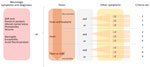
Figure 1. Fever requirement and other symptoms in clinical criteria sets evaluated for Oropouche virus disease, United States, 2024–2025. For all criteria sets, patients met clinical criteria for testing if they had…
To assess which signs and symptoms were more likely to be associated with Oropouche virus disease, we evaluated the performance of 9 different clinical criteria sets. The clinical criteria sets varied in the restrictiveness of a fever requirement (fever and headache, fever alone, fever or chills) and the number of other symptoms required (Figure 1). Fever was reported by the submitting jurisdiction and could be subjective or measured. Other signs and symptoms included headache, myalgia, arthralgia, retroorbital or eye pain, and rash. All 9 clinical criteria sets included any diagnoses (e.g., meningitis, encephalitis, acute flaccid paralysis) or neurologic signs and symptoms (e.g., stiff neck, paresis or paralysis, altered mental status, photophobia, seizures, or other acute signs of central or peripheral neurologic dysfunction as documented by a physician).
Statistical Analysis
We described demographic, clinical, testing, and epidemiologic characteristics of cases as percentages for categorical variables and as medians and interquartile range (IQRs) for continuous variables. We used χ2 or Fisher exact tests to compare demographic characteristics (age and sex), travel histories, and frequency of clinical symptoms of cases and noncases and considered p2 test into univariable and multivariable logistic regression models predicting Oropouche virus disease status. We used backward stepwise selection to identify the best fitting model, checked model assumptions, and then assessed multicollinearity by using a condition index cutoff of
To evaluate sensitivity and specificity of the 9 clinical criteria sets, we calculated positive predictive value (PPV) and negative predictive value (NPV). In addition, we assessed the effects of adding travel to a country with known OROV transmission during the 2024–2025 outbreak for the most sensitive criteria set. Countries with known OROV transmission during May 2024–January 2025 included Barbados, Bolivia, Brazil, Colombia, Cuba, Ecuador, Guyana, Panama, and Peru (14). We conducted all statistical analyses in R version 4.4.0 (The R Project for Statistical Computing, https://www.r-project.org).
This activity was reviewed by the human subjects advisor at CDC’s National Center for Emerging and Zoonotic Infectious Diseases and was deemed not research and exempt from full human subjects review. The activity was conducted consistent with applicable federal law and CDC policy (project no. 0900f3eb8259aef6).
Patients Characteristics
Among 375 patient samples tested for OROV at the CDC laboratory or a state public health laboratory, 103 tested positive at CDC and 6 tested positive at a state public health laboratory. We excluded 5 patients who tested positive for both OROV and acute dengue from the remainder of the analysis, leaving a total of 370 tested patients with 104 cases and 266 non-cases in the final dataset.
Of the 104 case-patients, 50 (48%) were female and 54 (52%) were male, and their median age was 52 (IQR 37–61) years (Table 1). Case-patients were residents of 7 states, and most (94%) were Florida residents. All case-patients reported recent travel to either Cuba (n = 103) or Panama (n = 1). About half (n = 51) of the case-patients had illness onset in July; most onset dates ranged from May to October 2024, and 1 person reported illness onset in January 2025. Oropouche disease diagnosis was determined by viral RNA detection in 53 (51%) cases and by neutralizing antibody detection in 44 (42%) cases. Seven (7%) case-patients had samples that tested positive for both OROV RNA and antibodies.
Figure 2
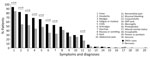
Figure 2. Percentages of patients with reported symptoms and diagnoses among those tested for Oropouche virus infection, United States, May 14, 2024–January 10, 2025. Statistically significant differences in the percentage of cases…
Among case-patients, the most common symptoms reported were fever (94%), headache (83%), myalgia (78%), fatigue or malaise (69%), chills (66%), arthralgia (55%), and diarrhea (53%) (Figure 2; Appendix Table 1). Symptom recurrence was noted in 33 OROV case-patients; whether the other 71 patients had a symptom recurrence was not noted. Of the 104 case-patients, 8 (8%) had mucosal bleeding and 2 (2%) had neuroinvasive disease, specifically meningitis. Fourteen (14%) case-patients required hospitalization, and 1 patient died, although whether death was attributed to OROV infection was uncertain. Of the 14 hospitalized patients, 8 (57%) were >50 years of age, and they commonly reported fever (93%), headache (79%), fatigue or malaise (71%), chills (71%), diarrhea (64%), and abdominal pain (57%) (Appendix Table 2). Compared with the 266 noncases, cases were significantly more likely to occur among persons reporting travel to a country with known circulating OROV during 2024–2025 (100% vs. 42%; p
Persons in the case group experienced significantly more symptoms compared with those in the noncase group; >5 symptoms were reported for 59.6% (n = 62) of cases compared with only 36.5% (n = 97) of noncases (pFigure 2). Nausea or vomiting also was common among cases but that variable was not significantly different from noncases.
All symptoms significantly correlated with cases by χ2 test were also significant univariable predictors of Oropouche virus disease; those symptoms were fever, headache, myalgia, fatigue or malaise, chills, arthralgia, diarrhea, and retroorbital pain (Table 2). The final multivariable model showed that, after adjusting for fever, the odds of being a case were significantly higher for persons reporting headache (adjusted odds ratio [aOR] 3.0 [95% CI 1.7–5.6]), myalgia (aOR 2.3 [95% CI 1.3–4.0]), fatigue or malaise (aOR 1.8 [95% CI 1.1–3.1]), or diarrhea (aOR 2.0 [95% CI 1.2–3.3]) (pTable 2).
Assessment of Clinical Criteria Sets
Among the 9 clinical criteria sets evaluated, sensitivity was 54%–99% and specificity 8%–65% (Table 3; Appendix Table 2). Overall, the PPV and NPV for most sets were similar; PPV ranged from 30% to 40% and NPV ranged from 78% to 95% (Appendix Table 3). The set with the lowest sensitivity and highest specificity (set 1, requiring both fever and headache and >2 other symptoms) would have missed 48 (46%) of 104 OROV cases. The set with the highest sensitivity and lowest specificity (set 9, requiring either fever or chills or >2 other symptoms) would have missed only 1 Oropouche virus disease case in a person who only reported headache. That criteria set had exceptionally low specificity at 8%; however, adding a requirement of travel to a country with known OROV circulation during the 2024–2025 outbreak increased specificity to 61% without affecting sensitivity.
During the 2024–2025 outbreak, patients with Oropouche virus disease identified in the United States were mostly adults, and all were travelers returning from areas with known outbreaks. Similar to patients with other arboviral diseases such as dengue, Zika, or chikungunya, travelers with Oropouche virus disease commonly had nonspecific symptoms including fever, headache, myalgia, chills, and fatigue or malaise, creating challenges for rapid case identification and public health response (6). Although some symptoms are more characteristic of certain diseases, no single symptom reliably distinguishes Oropouche from other arboviral diseases, underscoring the need for laboratory testing and epidemiologic context (6). The clinical criteria sets we evaluated resulted in a wide range of sensitivity (54%–99%) and specificity (8%–65%); those different clinical criteria sets could be adopted in various settings depending on transmission dynamics and available testing resources.
This case series represents most of the known travel-associated OROV infections worldwide (18,19). This report adds to the original description of 21 cases (13) and adds 83 more cases, showing similarities in the demographic characteristics and most common symptoms (fever, myalgia, headache, and fatigue or malaise) (13). The clinical manifestations of patients in our dataset parallel those reported in patients from outbreak areas (3,13,19). In Cuba, for example, more than half of patients had fever, headache, malaise, and arthralgia, and other less commonly reported symptoms including asthenia, anorexia, retroorbital pain, and abdominal pain (20). Similar findings have been reported from Brazil (21). In our data, gastrointestinal symptoms, including nausea or vomiting and diarrhea, were also common, although only diarrhea was a significant predictor of Oropouche virus disease. In line with previous estimates of hemorrhagic phenomena, ranging from 4% to 16% of patients (8,22), our data showed that 8% of case-patients had mucosal bleeding. The percentage of US patients with neuroinvasive disease was 2%, similar to the percentage of reported neuroinvasive cases in Cuba (≈0.5% of suspected cases), although some cohorts in Cuba have demonstrated a much larger percentage of patients with neurologic manifestations, including encephalitis in almost one third of patients and Guillain-Barre syndrome in about one fifth (23,24). That discrepancy in the estimated frequency of neurologic manifestations might be the result of different surveillance approaches and testing criteria for OROV infections.
Decision-making about clinical criteria to inform testing strategies and case reporting is driven by the available resources (e.g., funding for testing, availability of supplies, laboratory capacity) and transmission dynamics (e.g., travel-associated cases only, sporadic local transmission, active outbreaks with high force of infection). Although the risk for sustained local transmission in the United States is considered low, the primary vector, the Culicoides paraensis midges, is domestically established, and investigation of possible locally acquired cases would enable prompt public health action to mitigate the risk for spread (5,25). Therefore, in that context, Oropouche virus disease surveillance strategy in the United States is to identify cases by using the most sensitive clinical criteria that balance sensitivity and specificity when combined with travel history criteria. More detailed spatial risk estimates could further improve targeting of testing strategies, although those data are difficult to obtain, analyze, and disseminate rapidly during emerging outbreaks (26).
Results from this analysis showed that requiring both fever and headache, in addition to other symptoms, would exclude some cases; thus, that criterion was not ideal for US surveillance needs. Including chills (indicating subjective fever) or no fever, as long as >2 other clinically compatible symptoms were reported, resulted in inclusion of several additional cases, and when combined with travel history, increased the clinical criteria set specificity and PPV. However, the PPV estimates for all clinical criteria sets were low, likely because of the nonspecific symptoms that are common in patients with Oropouche virus disease. In contrast, the NPV was relatively high for most clinical criteria sets, which is consistent with the finding that most patients with OROV infection had >5 symptoms and suggests that, although the disease is generally considered to be mild, patients can seek care with multiple complaints.
In scenarios where testing capacity does not meet demand, such as example in outbreak settings with high testing needs or in lower-resourced settings with limited testing capacity, stricter clinical criteria for testing might be more appropriate. For example, the more restrictive clinical criteria in the Pan American Health Organization’s recommended suspected case definition, which corresponded to our clinical criteria set 1, is likely more appropriate for countries where testing resources are constrained (27).
To identify OROV-specific clinical criteria, we excluded cases that were co-infected with dengue from our analysis. OROV and dengue virus co-infections have been reported previously (28,29). Given the clinical similarity of disease manifestations among arboviruses that cocirculate in certain areas (e.g., dengue, Zika, chikungunya), testing for all appropriate agents should be considered (6). For patients testing positive for dengue in areas where OROV is known to circulate, CDC recommends clinicians consider OROV testing if the patient has neurologic symptoms, which are more common with OROV infection; if the patient is pregnant, given the potential adverse outcomes associated with OROV infection in pregnancy; or if the patient experiences a recurrence of their symptoms, which is relatively unique to OROV infections.
The first limitation of this analysis is that at the time testing began, many clinicians and public health jurisdictions had limited knowledge of OROV, and as a result, patients who were tested might not be representative of all suspected cases and might overrepresent patients from jurisdictions where knowledge of Oropouche virus disease was highest. Second, reporting of symptoms might have been incomplete, likely representing the patients’ initial symptoms when they sought care, and variable by jurisdictions’ case investigation and reporting protocols. In addition, ArboNET is a passive reporting system with nonmandatory fields and does not capture certain data such as recurrence of symptoms. Third, initial testing guidance provided by CDC for suspected Oropouche virus cases included clinical criteria (i.e., fever and headache and >2 other symptoms) that were informed by historical reports of Oropouche symptoms from endemic areas where case detection predominantly relied on testing dengue-negative patients. That guidance could bias our results to overrepresent those symptoms and limit our ability to detect unique symptoms and clinical manifestations of Oropouche virus disease that do not resemble previously reported cases. Finally, some patients might have been misclassified as noncases if they had specimens collected after viral clearance but before developing neutralizing antibodies, potentially resulting in bias of symptom comparisons toward the null.
In conclusion, CDC incorporated the clinical criteria considered optimal in this analysis (set 9, fever or chills or >2 symptoms), in addition to travel history, into the suspected case definition, to identify which patients should be considered for testing, and into the clinical criteria of the US national case definition for Oropouche virus disease (30). Findings from this study can inform the development of suspected case definitions for consideration in different outbreak and resource scenarios. In the future, if disease transmission is more widespread or testing capacity cannot meet demand, stricter clinical criteria for testing could provide a more favorable balance between sensitivity and specificity.