



The Chile Ministry of Health issued a Health Alert for hantavirus and other diseases, such as some arboviruses and avian influenza.
This is the first time this measure has been taken and it will be in effect until July 31, 2027 and it extends from the Atacama region to the Magallanes region.
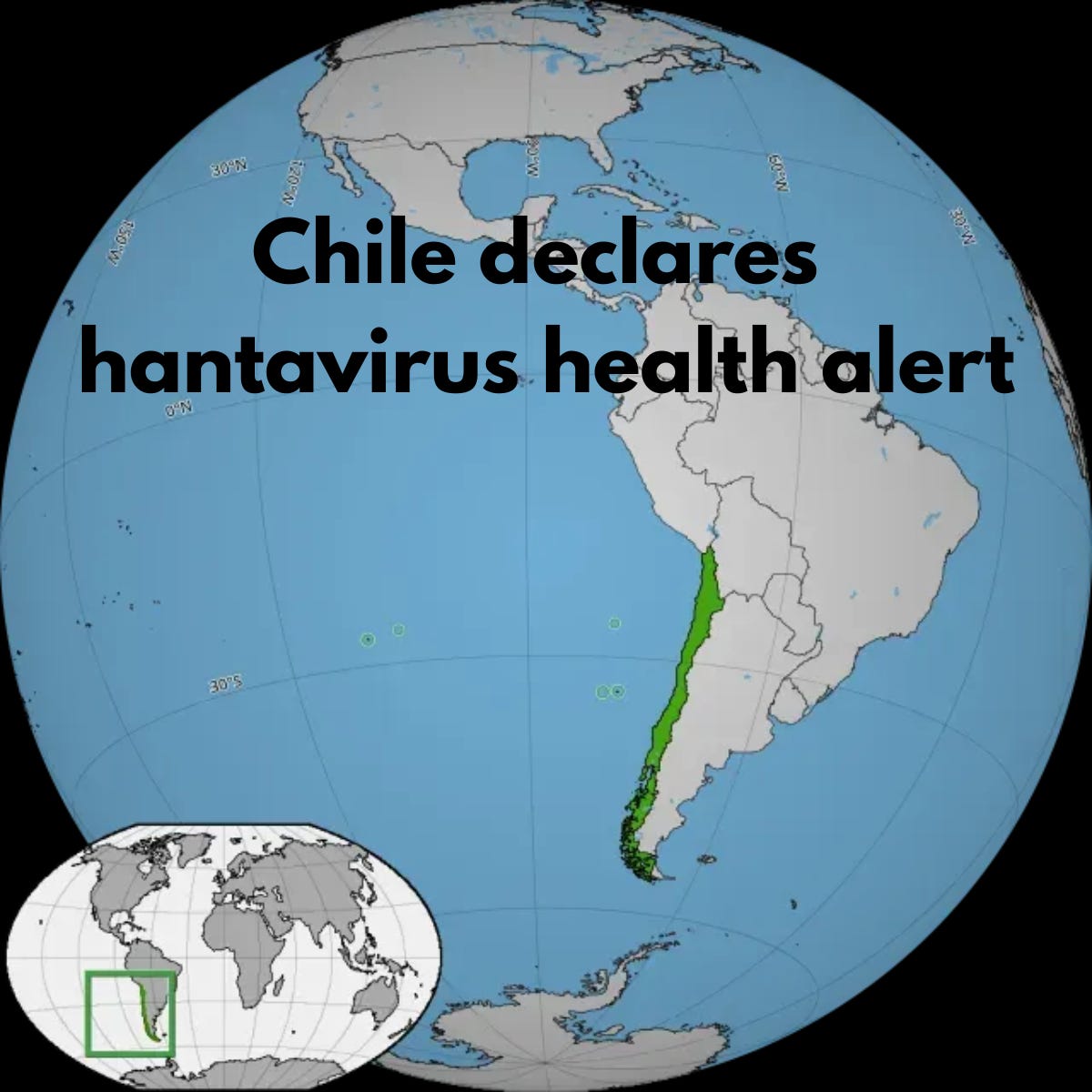
“Hantavirus causes a disease that is endemic to Chile, transmitted by the long-tailed pygmy rice rat that lives in rural and semi-rural areas throughout almost the entire country. As a ministry, we are constantly monitoring its behavior and are very concerned and actively working because this year the virus’s lethality has increased, and for this reason, we decided to declare this alert. As of last week, there were 46 confirmed cases and 18 deaths, representing a 39% lethality rate,” reported the Undersecretary of Public Health, Dr. Alejandra Pizarro.
Cases have occurred in the regions of Valparaíso, Metropolitan, O’Higgins, Maule, Ñuble, Biobío, La Araucanía, Los Ríos, Los Lagos, and Aysén.
By comparison, in 2025, there were 44 infections and eight deaths (18% case fatality rate).
The health alert, which is preventative and prepared, will allow for the granting of extraordinary powers in the event of serious health emergencies to strengthen surveillance, ensure timely resource management, hire specialized personnel, implement health control measures, and expedite the acquisition of supplies through direct procurement. The alert does not imply that there is an ongoing epidemic or that the healthcare system is overwhelmed.
Subscribe to Outbreak News TV on YouTube
“Hantavirus is not exclusively a summer virus, as the long-tailed pygmy rice rat is present year-round. Therefore, we urge everyone to take extreme precautions: avoid touching rodents, ventilate homes before entering if they have been closed, clean unused spaces with water and bleach, and keep garbage covered and food stored away. Furthermore, it is crucial to be aware of the symptoms: fever, intense muscle pain, and difficulty breathing. If someone experiences these symptoms and has been in rural or semi-rural areas where the long-tailed pygmy rice rat may have been present, they should immediately go to a health center and inform the medical staff so that a hantavirus diagnosis can be considered promptly,” the official added.
Since December 2025, the Pan American Health Organization (PAHO) has maintained an epidemiological alert due to the rise in hantavirus cases throughout the Southern Cone, and that the Ministry of Health had an epidemiological alert in place since November of last year.
As mentioned above, the Health Alert decree also covers diseases transmitted by the Aedes aegypti, Aedes vexans, and Anopheles pseudopunctipennis mosquitoes, such as dengue and Zika, which, according to the alert, “have a high epidemic potential, which could generate high demand and overload for health facilities.” For these diseases, the alert is in effect from Arica to Los Ríos.
The authority stressed that it is essential to prevent mosquitoes from breeding in stagnant water and to monitor any suspected cases of people arriving from abroad infected with any of these diseases, in order to prevent any of these vectors from biting a sick person and starting to spread the disease.
In the case of avian influenza, the alert was extended to the entire country, because unlike other years, the disease has been concentrated in wild and farm birds, not in poultry farms, increasing the risk of exposure for people.