



Richard Goldman lived with HIV (human immunodeficiency virus) for at least five years with few symptoms.
Although he sometimes felt rundown or feverish, he continued to work full time as a physician assistant at a San Francisco hospital. When he developed rectal pain at age 40, his doctor said he just had hemorrhoids.
Goldman waited months to discover the real source of the pain: anal cancer.
“The colorectal surgeon was very specific in saying that it had nothing to do with AIDS,” said Goldman, now 77.
It was 1989, and scientists had only just begun to link anal cancer to human papillomavirus (HPV), a virus that causes 90% of anal cancers. HPV also causes almost all cervical cancers and most cancers of the vagina, vulva, penis, and head and neck.
Researchers didn’t learn that people with HIV are at high risk for HPV-related anal cancers until the mid- to late-1990s.
Goldman’s doctors said they had no idea what to expect when treating anal cancer in someone with a severely weakened immune system, and that he should “get his affairs in order.”
“It was scary to go through chemo and radiation without an immune system,” Goldman said.

(Photo courtesy of Richard Goldman)
Thirty-seven years later, Goldman said he feels lucky to be alive.
“It’s emotional to talk about this, because it’s mind-blowing, and I’m so fortunate and grateful,” Goldman said. “My friends just circled the wagons and took care of me.”
Immune suppression increases risk of HPV-related cancers
Doctors today know far more about HPV-related anal cancers—including how to prevent them—than when Goldman was diagnosed.
Almost everyone who has ever had sex has been exposed to HPV, a large family of viruses that cause six types of cancer: anal cancer, cervical cancer, head and neck cancer, penis cancer, vaginal cancer, and vulvar cancer.
HPV spreads through intimate, skin-to-skin contact. In the vast majority of cases, the immune system keeps HPV in check, and the virus doesn’t pose a threat.
People with weakened immune systems, including those with HIV or who have received solid-organ transplants, are at much higher risk.
A study published today in JAMA Network Open finds that people with HIV are 4.5 times more likely to develop a cancer fueled by HPV. Organ transplant recipients are more than twice as likely.
People with HIV have an especially high risk of anal cancer.
People with HIV are 59 times as likely to develop anal cancer than other people, according to the study of more than 350,000 people born from 1940 to 2000, led by Swedish researchers. People with HIV are eight times as likely to develop penile or vulvar cancer, and 2.5 times as likely to develop cervical cancer.
Researchers found no statistically significant increased risk among people with HIV for head and neck cancers. The study had no information about vaginal cancers.
Nearly 11,300 new cases of anal cancer are diagnosed in the United States each year, including 3,570 in men and 7,700 in women, according to the American Cancer Society. About 1,700 people die.
While women make up the bulk of people with anal cancer, men have a much higher risk. According to the new study, straight men with HIV are more than six times as likely to develop anal cancer than others, while men who have sex with men are five times as likely.
The risk of anal cancer in HIV-positive men who have sex with men is now higher than the risk for cervical cancer was in women before the advent of Pap tests, said Mark Einstein, MD, chair of obstetrics and gynecology and women’s health at Montefiore Einstein Medical Center in New York, who was not involved in the new study.
People whose HIV is not well controlled were 8.6 times more likely to develop an HPV-related cancer, the study found. But even people whose HIV is well-controlled have a risk of HPV-related cancer 3.9 times higher than others.
Preventing disease caused by HPV
Although anal cancer rates are increasing, especially in older women, people today have more ways to protect themselves.
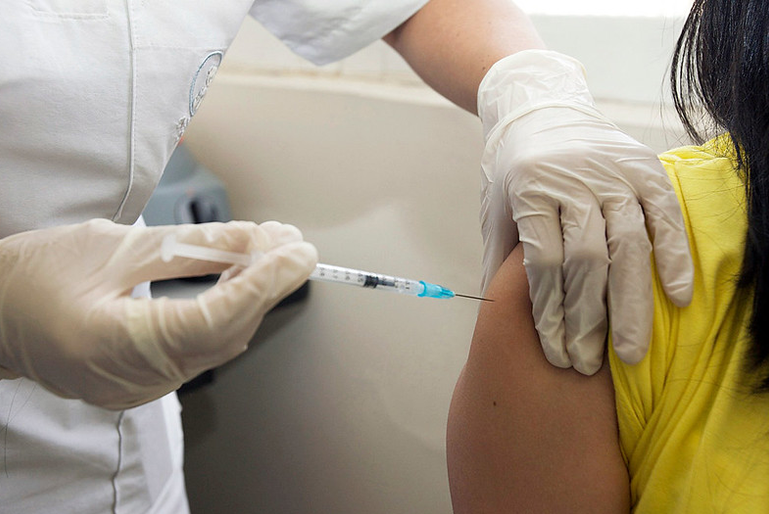
The Food and Drug Administration has approved Merck’s Gardasil HPV vaccine to prevent six kinds of cancer, including anal cancer. The vaccine protects against nine viral strains, including HPV 16, which causes most anal cancers.
In a randomized trial of men who have sex with men, vaccinating boys and young men against HPV before age 26 reduced the risk of anal precancers by 75% compared to unvaccinated men. An analysis of how the vaccine would perform in the real world found a 50% reduction in precancer.
A study published this year in JAMA Oncology found that vaccinated men had a 50% lower risk of an HPV-related cancer, including head and neck, esophageal, anal, and penile cancers.
Gardasil is approved for children and adolescents from ages 9 to 26 years. The HPV vaccine is available to people up to age 45 who have discussed the benefits and risks with a healthcare provider.
“I’m a huge fan of the HPV vaccine,” said George Froehle, a physician assistant and HIV specialist at the Aliveness Project, an HIV clinic in Minneapolis, Minnesota. “I offer the HPV vaccine to all my patients who aren’t already vaccinated, regardless of age.”
It could take decades for research to show whether HPV immunizations reduce the rate of anal cancer rate, given that these tumors tend to be diagnosed at older ages. The median age of diagnosis is 65, according to the National Cancer Institute.
About 78% of teens aged 13 to 17 in the United States have received at least one dose of the HPV vaccine, which is recommended beginning at age 9. About 63% of adolescents this age have received all recommended doses.
Screening for anal precancers
Healthcare providers also can screen and treat people at high risk for anal HPV.
In 2022, a landmark trial published in the New England Journal of Medicine found that screening and treating anal precancers in people with HIV reduced the risk that the growths would become cancerous by 57%.
Screening for anal cancer is similar to screenings for cervical cancer. Healthcare providers use a swab to test for HPV, and also perform an anal Pap test, which collects cells to be examined under the microscope.
If the anal Pap test finds abnormal cells, clinicians perform an office procedure called anoscopy, using a special tool to examine the anal canal and, if needed, take tissue samples for analysis, Froehle said. Healthcare providers can remove precancerous lesions before they become malignant.
At Whitman-Walker Health in Washington, DC, medical site director Kyle Benda, DO, recommends anoscopy for anyone infected with HPV 16, even if their Pap test appears normal.
He also lets patients collect their own samples while at the clinic. People can screen themselves for anal HPV much like people test themselves at home for COVID-19. The major difference is that HPV samples go to a lab.
“I almost exclusively offer self-test options,” Benda said. “It takes a minute or two of instruction about how to collect the sample. It’s worked out really well for us and has increased our patients’ willingness to be screened.”
The International Anal Neoplasia Society published anal screening guidelines in 2024 that recommend screening people at high risk for anal cancer.
People with the highest risk—HIV-positive transgender women and men who have sex with men—should begin screening at age 35, according to the guidelines. Other people with HIV should be screened for anal cancer beginning at 45.
Among people without HIV, the guidelines call for transgender women and men who have sex with men to be screened at 45. People with who have had vulvar cancer or precancer should have anal cancer screening within a year of diagnosis. And people who’ve received a solid-organ transplant should be screened within 10 years of the transplant.
Gaps in care
Yet relatively few people at high risk for anal cancer are being screened.
Only half of people with HIV have had an anal Pap test, said Patrick Eucalitto, MD, an assistant professor of obstetrics and gynecology and women’s health at Montefiore Einstein Medical Center in New York City.
Every community needs to work on knowing more about conditions that affect us all.
And while “doctors caring for people with HIV are well aware” of patients’ risk for anal cancer, “it is extremely important to increase awareness regarding the risk associated with HIV infection, immunosuppression, and HPV-related cancers,” according to infectious disease specialist Eric Meyerowitz, MD, an associate professor of medicine at Montefiore Einstein.
Although a growing number of clinics offer anal Pap tests, far fewer offer anoscopy or an even more sophisticated procedure, called high-resolution anoscopy. Both procedures require special training. People who need these procedures typically have to travel to a large metropolitan area. “This is a huge problem,” Meyerowitz said.
Goldman said more people need to be aware of the risk of anal cancer and take steps to prevent it.
Although the elevated risk of anal cancer seems to be well-known among people with HIV, Goldman said there hasn’t been much education in the larger LGBTQ community. “It’s very inconsistent, even in big cities,” he said. “They’re still not universal, even in San Francisco.”
The stigma of anal cancer makes it challenging to raise awareness about it, Goldman said. Many people remain biased against the LGBTQ community and people with HIV, he said.
Although some people assume that anal cancer is only a risk for men who have sex with men, “there are people who do not engage in any sort of anal sex that may be at risk” for anal cancer, Benda said.
“Some people get uncomfortable talking about anal health,” Benda said. “But it’s important to know about anal cancer, because we can do something about it.”
“Every community needs to work on knowing more about conditions that affect us all,” Benda said. “There’s definitely more that can be done, particularly around healthcare providers discussing HPV in a nonjudgmental way.”
‘We are miracles’
When Goldman was first diagnosed as having anal cancer, he wanted to warn other people. “I was like, ‘Wow, I have to talk about this,’” Goldman said. “Not everyone wanted to hear about it.”
Goldman tells his story, he said, because he doesn’t want other people to go through what he has suffered. He volunteers with the Anal Cancer Foundation as a “buddy” to people newly diagnosed with anal cancer.
Goldman, who is in a support group for people who’ve lived with AIDS for a long time, describes himself and fellow members this way: “We’re all dinosaurs. We’re starting to fall apart sooner than we would have. But we made it this far, which is amazing. We are miracles because no one expected to live this long.”