



Figure
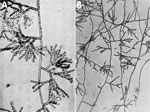
Figure. Images from early records of Cladosporium carrionii. A) Fonsecaea pedrosoi var. cladosporium by F.W. Simson in 1946. B) Cladosporium carrioniin. sp. by…
Cladophialophora carrionii is a black fungus that causes chromoblastomycosis. The fungus was first reported in 1946 as Fonsecaea pedrosoi var. cladosporium. In 1954, mycologist Alfonso Trejos named this chromoblastomycosis agent Cladosporium carrionii n. sp. (Figure). Later, molecular phylogenetic analysis and morphologic traits (cladosporioid anamorphs and phialidic synanamorphs) supported its current placement in the genus Cladophialophora.
The term Cladophialophora is derived from the Greek words klados (branch) and phiala (flask or bottle) and the suffix phora, which means bearing or carrying, emphasizing that these structures produce and harbor the fungal spores. The specific epithet carrionii is in honor of the charismatic Puerto Rican mycologist Prof. Dr. Arturo I. Carrión, renowned for his contributions to medical mycology, particularly in the taxonomy and clinical understanding of dematiaceous fungal pathogens. Therefore, the full name Cladophialophora carrionii means a black flask-shaped fungus with branched conidia chains, named in mention to doctor Carrión.