



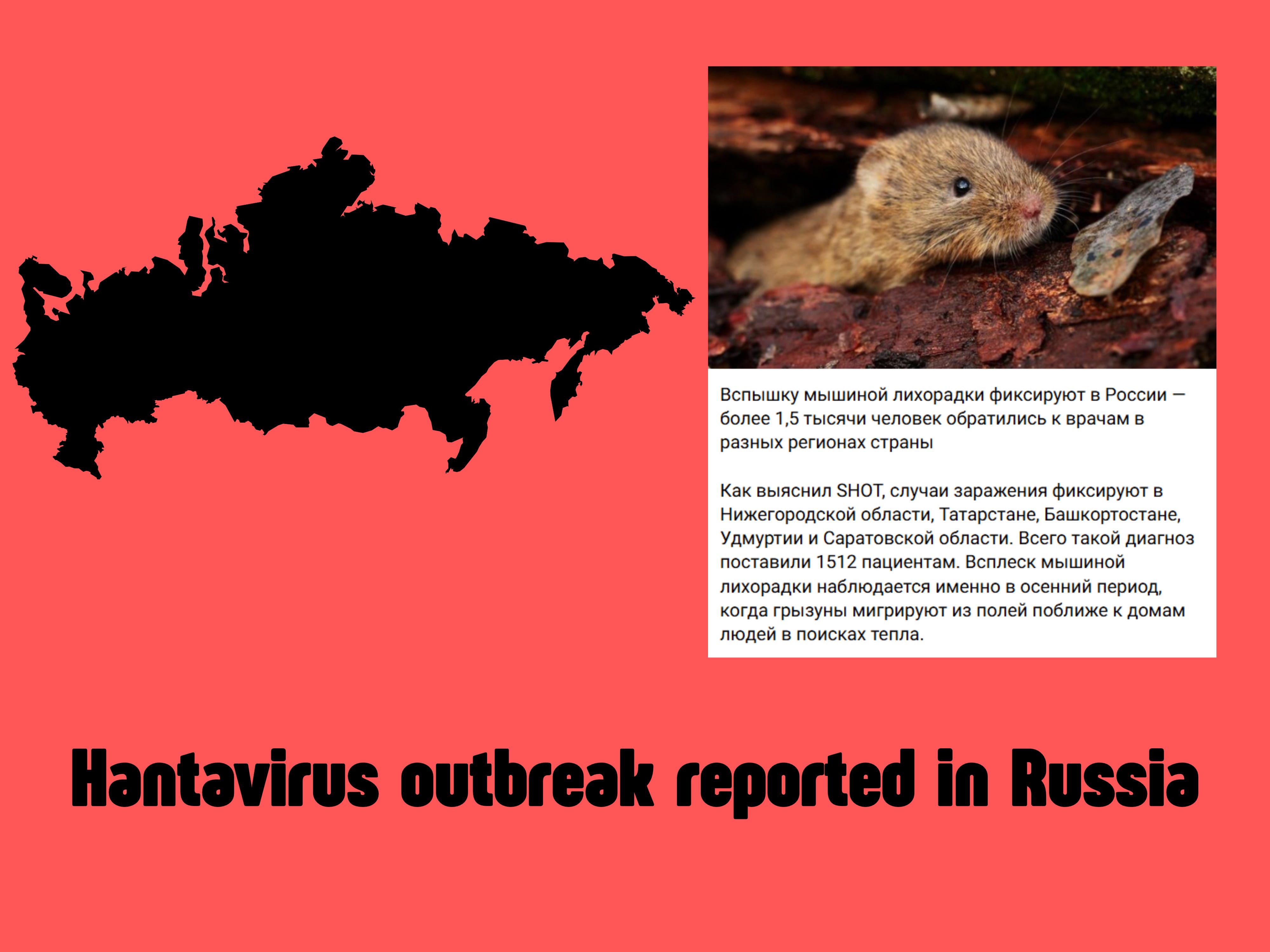
Russian health officials report a significant increase in the incidence of hemorrhagic fever with renal syndrome (HFRS) caused by hantavirus, according to local media.
According to the SHOT news outlet, cases have been reported in the Nizhny Novgorod Region (278), Tatarstan, Bashkortostan (367), Udmurtia (656), and the Saratov Region, with a total of 1,512 patients diagnosed. A surge in this illness typically occurs during the autumn, as rodents migrate from fields toward human dwellings in search of warmth.
Hantavirus can be contracted while clearing away fallen leaves—whether at a summer cottage or even within a city—where traces of rodent activity, such as saliva or droppings, may be present. The virus is transmitted to humans either through airborne particles or via direct contact.
Those infected experience a sudden, sharp rise in body temperature (up to 39–40°C), accompanied by pain in the muscles, lower back, abdomen, and head. Additionally, unusual redness may appear on the face and upper body. In the most severe cases, the infection can lead to kidney dysfunction. The illness does not manifest immediately; symptoms may appear as long as a month after exposure. Patients require hospitalization, as attempting to treat the condition independently can lead to serious kidney complications.
The Federal Service for the Oversight of Consumer Protection and Welfare, aka Rospotrebnadzor states that the epidemiological situation with HFRS “in the country is stable and under control.” Cases of “mouse fever” have been recorded annually since 1978. “This infection is characterized by cyclical increases in incidence—on average, every 3-5 years. These increases are largely related to the population and infection rate of rodents, primarily the bank vole, which is the main carrier of HFRS pathogens in natural foci.”
The primary route of hantavirus infection is airborne dust. “Dried rodent excrement turns into dust, which becomes airborne when harvesting or handling hay, straw, and brushwood. The virus enters the respiratory tract, causing the person to become ill. It can also be transmitted through broken skin when touching contaminated objects or through food—by consuming food or water contaminated with rodent excrement,” the Pskov regional office of Rospotrebnadzor explained in early September.
Medical professionals advise wearing masks when cleaning outdoor areas and caution against touching rodent droppings, nests, or dead rodents with bare hands. It is essential to wash one’s hands thoroughly immediately after finishing such tasks. Doctors also note that there is currently no vaccine available in Russia for this type of “mouse fever.”
Related:
Russia: New case of Mpox detected in the Moscow Region
Russia: 189 people under observation after lab worker dies of possible pneumonic plague