



In April 2026, a couple boarded the MV Hondius, a Dutch expedition cruise ship, in southern Argentina after weeks of trekking through Patagonia. One of them — the index case — was already infected with Andes hantavirus, a pathogen carried by the long-tailed pygmy rice rat and the only hantavirus known to spread between humans. He fell ill around April 6 and died on board five days later. By the time the outbreak was declared over, 13 people had been infected, three had died, and public health authorities across the UK, Netherlands, and more than 30 other countries had spent weeks tracing over 300 contacts scattered across the globe.
According to Catherine Houlihan, an NHS virologist at University College London Hospitals and a lead clinician at the UK Health Security Agency’s Rare Imported Pathogens Laboratory, the outbreak forced an uncomfortable question that most pandemic planning still hasn’t answered: what do you actually do when you know people are spreading a deadly virus before they feel sick, and you have nothing proven to stop it?
Speaking on the podcast This Week in Virology alongside her Dutch counterpart Corinne Goertz van Kessel of Erasmus Medical Center, Houlihan described a response that succeeded on virology but nearly broke on logistics. The virus was sequenced fast enough to prove human-to-human transmission. The post-exposure prophylaxis? That didn’t exist in any usable form.
The cruise ship was the accelerant, not the cause
Andes virus is a spillover pathogen. Humans typically contract it by inhaling aerosolized rodent excreta in rural areas of Chile and Argentina. The index case and his wife had been traveling by camper through multiple Patagonian regions before boarding. Goertz van Kessel said the couple’s travel logs and genetic comparison of patient viruses against circulating animal viruses make the Patagonia exposure “highly suspect,” but no virus has yet been isolated from animals on their specific route. Sampling at a suspected Tierra del Fuego bird-watching site found neither the rice rat nor matching sequences.
What turned a rare zoonotic infection into an outbreak was the setting. “If you enter a cruise ship with an infected person that is the ideal situation — you don’t need a super spreader event or a big party because you are all closely together,” Goertz van Kessel said. She attributed infection risk to exposure intensity and close contact rather than age, noting that the affected patients included doctors and guides who had close contact with index cases, not only elderly passengers.
The alternative hypothesis — that rodents boarded the ship and infected passengers independently — was treated as largely excluded. Houlihan cited rat guards on mooring ropes, port inspections including a sniffer-dog check at South Georgia that found no rats, and the obsolescence of de-ratting certificates. Goertz van Kessel added that extensive environmental sampling found no evidence of rodents on board, though viral genome was detected in the uncleaned rooms of ill passengers.
The timeline ran on a long incubation and a slow signal
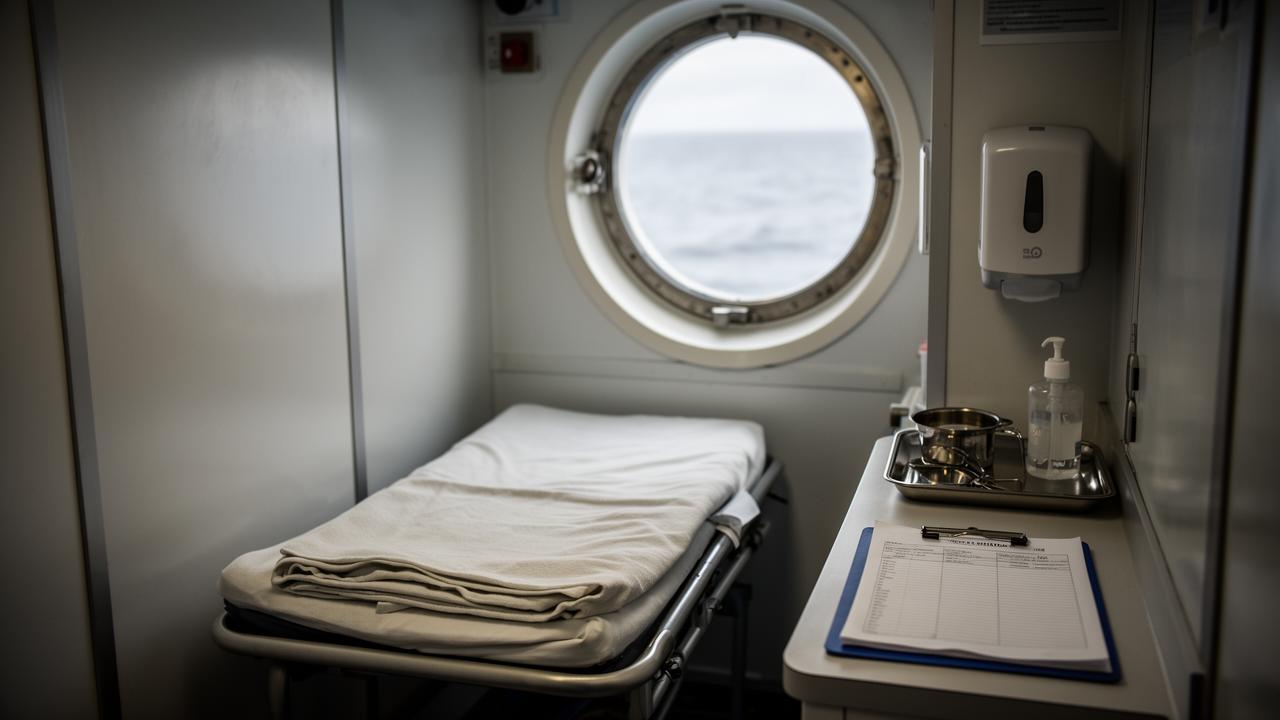
The MV Hondius departed the southern tip of Argentina on April 1, 2026, bound for Cape Verde via multiple islands. The first case fell ill around April 6 and died on board on April 11. Two further cases appeared around April 20–22, one of whom also died after disembarking. A third individual became unwell after leaving the ship.
The World Health Organization did not flag the event publicly until May 2 — a delay both guests attribute to the nature of the disease rather than negligence. A single death on a cruise ship is not unusual, ships carry mortuaries, and the long incubation period meant the cluster only became visible weeks later.
The incubation parameter shaped everything. “The incubation of this hantavirus is up to 42 days, the usual, the average incubation is 18 to 22,” Houlihan said. That 42-day maximum defined the monitoring window for exposed contacts. But the same long window created ambiguity. The index case’s wife — case two — likely acquired infection about 18 days after the index case’s symptom onset, consistent with person-to-person transmission on board. Yet Houlihan acknowledged it cannot be ruled out that she was infected independently on land, given the incubation period can stretch to six weeks.
The index case died on the ship and was never sampled. Samples from the wife were rescued just before being discarded by South African doctors and were sequenced, confirming Andes hantavirus.
Genomic evidence pointed to human-to-human spread — with one caveat
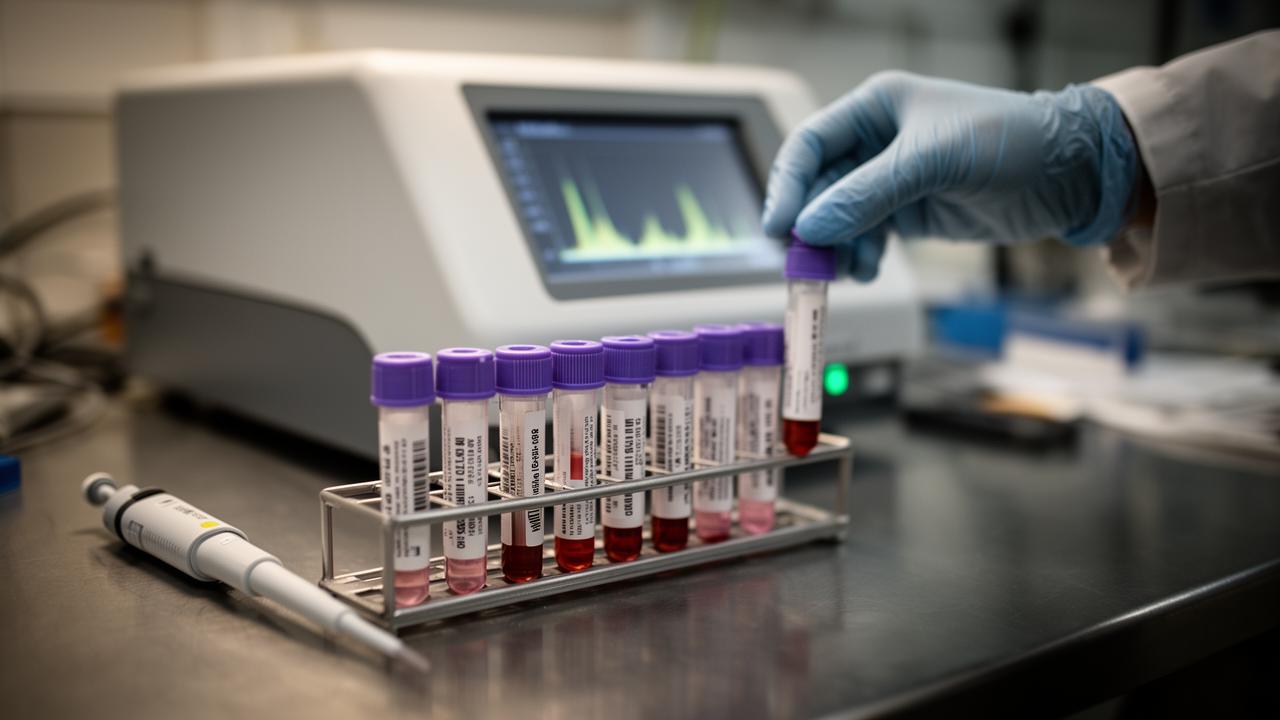
Sequencing was available for 12 of the 13 cases. The only gap was the index case, for whom no material exists. The viruses differ by no more than one SNP per case.
Goertz van Kessel said this makes human-to-human spread “very likely,” and for the three later patients who fell ill well after the 42-day maximum incubation window, “it’s almost not possible that there was another route of infection unless there would have been rodents on board of the boat, but that has been almost completely surely excluded.”
But she stated the caveat plainly: identical sequences could also reflect multiple people infected at the same site from the same virus. Multiple waves cannot be concluded with certainty because the sequenced viruses are all so similar, and multiple person-to-person contacts likely contributed to spread.
The exact mechanism of Andes transmission remains unidentified. Houlihan pointed to evidence supporting very close contact rather than aerosol-driven spread: “There’s good evidence of sexual contact, not necessarily through sexual transmission, but presumably through kissing and very close contact… we do detect in saliva, in crevicular fluids and nose and throat swabs, so the virus is there.” Household transmission between non-sexual contacts has also been documented, including at least one mother-to-ten-year-old-daughter case in the Chilean literature.
Contact tracing, quarantine, and a repatriation run on one pair of hands
Houlihan’s operational account is the most concrete logistics segment of the conversation. The UK repatriated 85 high-risk contacts scattered globally, with 35 individuals housed in isolation at Arrowe Park. The UK adopted weekly PCR on nose and throat swabs plus Andes-specific ELISA serology, following guidance the European Centre for Disease Prevention and Control issued quickly. None of the UK individuals tested positive or seroconverted.
The Netherlands admitted two symptomatic patients who did not require respiratory support or ICU care, monitored them with testing roughly three times weekly, and transferred a third patient to Germany. Goertz van Kessel said the Dutch follow-up caught one patient who tested positive before symptom onset, which validated the weekly testing cadence. The ship arrived in Rotterdam on May 18; Dutch crew, including many Filipino crew members, were quarantined in the Netherlands.
Houlihan traveled alone to Tenerife to repatriate 25 contacts, a decision she now questions. High-consequence PPE requires a trained observer to verify safe doffing, and she had no second trained person. She improvised by training air crew and by drawing a seating map in case a passenger became symptomatic in flight, pre-designating a rear sick bay, a dedicated toilet, and separate crew and passenger toilets. A call 48 hours after delivery confirmed none had become symptomatic.
A comparative detail worth noting in the data: the UK used nose and throat swabs while the Netherlands used crevicular fluid, and the UK found more virus. The same PCR run in different labs yields different Ct values, which can change whether a contact is managed under high-level PPE and isolation — what Houlihan called “really interesting comparative public health virology.”
The key numbers from the outbreak
| Metric | Value |
|---|---|
| Total PCR-confirmed cases | 13 |
| Deaths | 3 |
| Contacts traced | 300+ |
| Countries and overseas territories involved | 33 |
| Andes hantavirus maximum incubation | 42 days |
| Andes hantavirus average incubation | 18–22 days |
| Days of pre-symptomatic viremia (2008 Chilean study) | 5–15 days |
| Chilean follow-up study cohort | 470 contacts of 70 cases |
| Cases sequenced | 12 of 13 |
| UK high-risk contacts repatriated | 85 |
| UK contacts isolated at Arrowe Park | 35 |
| UK contacts who took favipiravir as PEP | 19 |
The disputed PCR result that shows the limits of the case definition
One healthcare worker with a possible guideline-noncompliant exposure had a single positive PCR at a very high Ct value — indicating low viral load — in one of the two Dutch reference labs. Erasmus MC and the national institute of health test jointly, but the result could not be confirmed at the other lab. The patient did not seroconvert.
Goertz van Kessel said there was insufficient evidence to call it a real exposure, while acknowledging mixed views on whether a very transient, short-lived viremia could explain it. Houlihan pressed her on the case explicitly, and the episode leaves it unresolved. The case matters because it exposes the boundary of the case definition: if one lab calls a contact positive and another doesn’t, the operational response diverges sharply.
Post-exposure prophylaxis is the real gap
Andes monoclonal antibodies exist and have hamster-model evidence, but they had not been through the safety testing required even for experimental use, so they were not deployed. Instead, the UK offered favipiravir as post-exposure prophylaxis to high-risk contacts; 19 individuals took a course. Whether it did anything is unknown — all were high-risk contacts and none developed disease.
Houlihan framed the broader problem: “Monoclonals versus antivirals, what should we be using in post-exposure prophylaxis? And it’s a question that comes up for all of these emerging infections, including Bundabugu — what have we got for post-exposure prophylaxis? Not very much.”
On treatment, antivirals used in several Hondius cases were given too late and showed no effect on viral load during illness. Chilean and Argentine scientists argued the more promising lever is immunotherapy targeted at the virus’s pathophysiology. Houlihan relayed a mechanism account from Chilean professor Pablo Vial, who joined the UK’s imported fever service educational meetings: the virus is not lytic but causes a functional disorder of the epithelial lining, so the cardiopulmonary syndrome arises from leaky membranes rather than cell destruction. “We tolerate the virus until we don’t,” she said.
The pre-symptomatic puzzle is the unresolved thread
Both guests returned repeatedly to the same gap: infectivity during incubation. The Chilean 2008 follow-up study of roughly 470 contacts of about 70 cases found people viremic from 5 to 15 days before prodrome onset. Yet when the UK Health Security Agency needed an operational rule, it took a pragmatic position.
“We know that people are viremic before they are symptomatic… from 5 to 15 days before their prodrome. So we took a pragmatic approach at UK HSA assuming people are infectious 48 hours before they’re symptomatic,” Houlihan said. She added that there is no real evidence for transmission at that point, and there is evidence of transmission during prodromal illness.
The gap between the evidence (viremia 5 to 15 days pre-prodrome) and the policy (48 hours) is not a failure of the response — it’s a reflection of how little is known about when a person actually becomes infectious. That gap drove the entire contact-tracing window, the quarantine decisions, and the follow-up testing cadence.
What the operators want to change
Goertz van Kessel’s stated research priority is the immune response: her team collected PBMCs from infected individuals over time to study B and T cell responses and cross-reactivity against other hantaviruses. She also flagged open questions on cell tropism, why whole blood shows such a long viremic phase, and why the virus is so hard to culture.
On what they would do differently, both pointed to preserving international cooperation and WHO’s coordinating role rather than to specific operational failures. Goertz van Kessel mentioned rapid diagnostics and pre-positioned material as conceivable improvements, while noting how hard those decisions are for clinicians on board. Houlihan recommended something simpler: treat a serious illness or death on an expedition-style cruise — where passengers have been mixing in rural areas or trekking — as a prompt to consider uncommon pathogens rather than assuming a common one.
Both credited the ship operator, Oceanwide Expeditions, for openness to studies and for onboard information about zoonoses. The MV Hondius has since returned to service and, as of the recording, was sailing toward Greenland.
The through-line is that the science held up better than the logistics. Sequencing arrived fast enough and cleanly enough to establish a one-SNP-difference chain across nearly every case, and the Chilean and Argentine cohorts supplied the incubation and transmission parameters the response ran on. What did not exist was a validated post-exposure prophylactic, a rapid point-of-care test, or a staffing model for high-consequence PPE during a single-medic repatriation. The disputed healthcare-worker PCR and the unresolved question of infectivity during incubation are the two loose threads most likely to matter in the next event. Both guests treat the monoclonal-versus-antiviral question as the research agenda this outbreak exposed rather than settled — and as the gap that will determine whether the next rare spillover on a ship, a plane, or a hotel floor is contained in three cases or thirteen.